
Turning agricultural biomass into clean fuel.
MAIAGRO’s Bio-CNG vision connects Napier grass cultivation, biomass procurement, anaerobic digestion, gas purification and organic fertiliser return into one integrated rural clean-energy model.
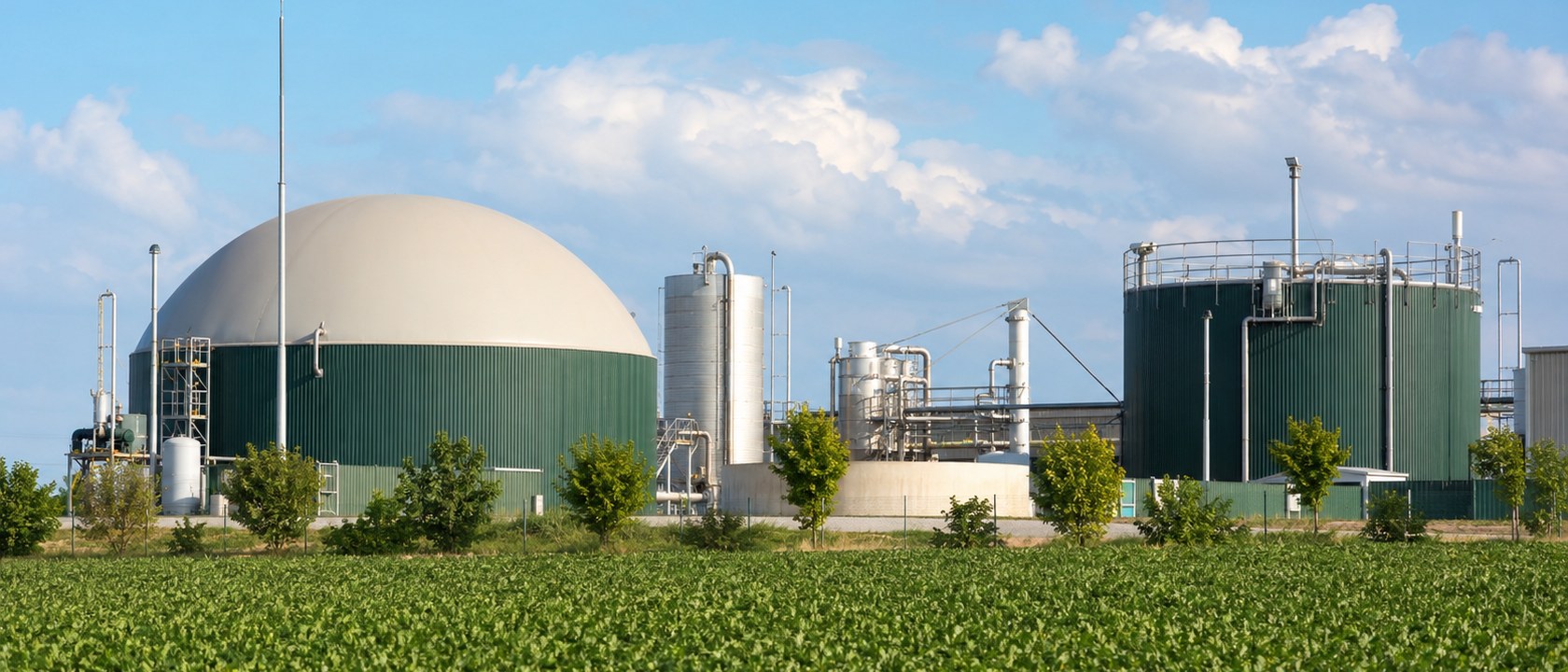
A renewable fuel produced from organic and agricultural material.
Bio-CNG is produced when organic feedstock is processed through anaerobic digestion. The process generates biogas, which is then purified and compressed to create a cleaner fuel suitable for multiple energy applications.
For MAIAGRO, the important part is the agricultural connection. Napier grass and suitable biomass can be cultivated and procured as planned feedstock, making the fuel supply chain farmer-linked rather than waste-dependent alone.
The digestate left after digestion can be processed or used as an organic input, allowing nutrients to return to the land and reducing the idea of waste in the system.
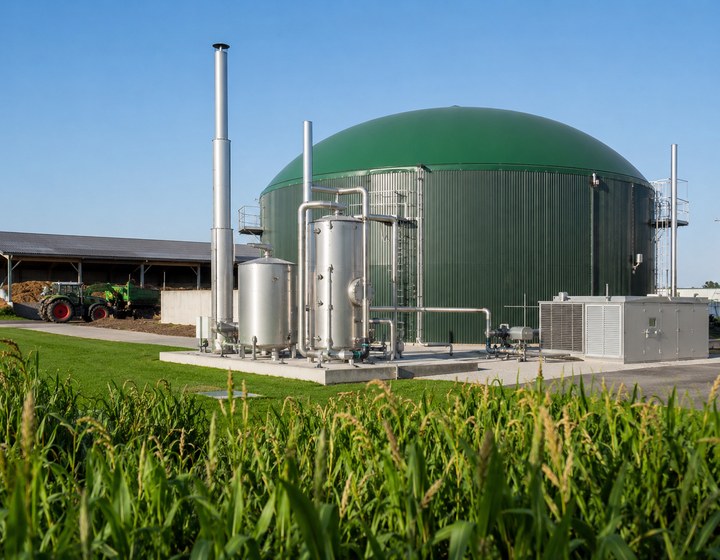
From crop to compressed gas.
Feedstock planning
Napier grass and suitable biomass are planned based on land availability, cutting cycles, quantity needs and plant requirement.
Collection and preparation
Biomass is harvested, aggregated and prepared for controlled digestion with attention to moisture, freshness and transport.
Anaerobic digestion
Organic material breaks down in an oxygen-free environment, producing biogas that can be upgraded for useful energy.
Purification and return
Biogas is purified and compressed, while digestate can support organic fertiliser use and soil improvement.
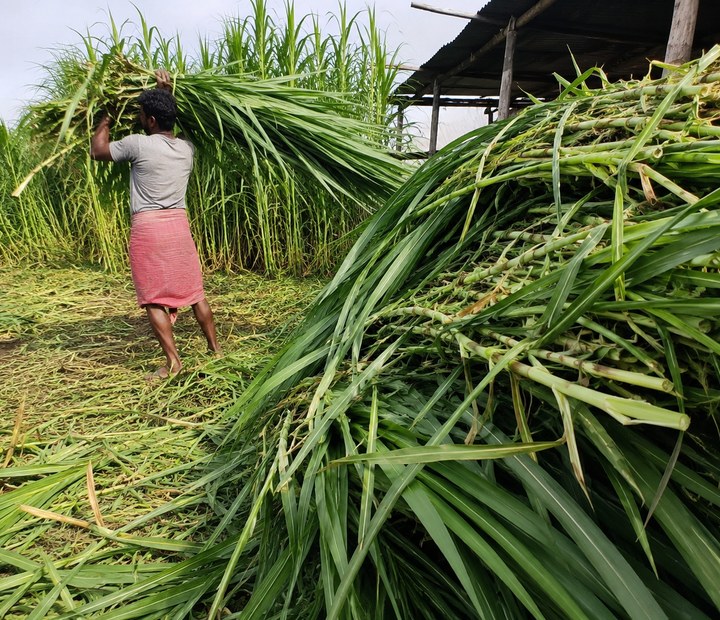
Napier grass gives the plant a planned farmer-linked biomass source.
Bio-CNG plants need dependable feedstock. Napier grass is valuable because it is a high-biomass crop and can be cultivated specifically for green biomass supply. With proper planning, farmers can align cutting cycles and transport with plant demand.
MAIAGRO supports this through farm-level discussions, planting guidance, harvest planning and buyback-linked coordination. The goal is to avoid uncertainty for both the farmer and the energy project.
This model can create an additional crop option for farmers while contributing to rural clean energy production.
Bio-CNG creates value across energy, farming and environment.
Organic and agricultural material can be converted into renewable gas instead of remaining unused.
Napier cultivation and feedstock supply can support additional farmer income opportunities.
Biomass and organic material can be routed into productive energy generation.
Digestate and organic outputs can return nutrient value to the land.
Who can participate in the Bio-CNG model?
Farmers
Grow Napier grass or supply suitable biomass through planned procurement and harvest schedules.
Institutions and energy buyers
Explore clean fuel partnerships and sustainability-led procurement possibilities.
Agri and logistics partners
Collaborate on feedstock aggregation, transport, organic inputs and plant supply systems.
Interested in Bio-CNG feedstock or partnership?
Contact MAIAGRO to discuss Napier grass cultivation, biomass supply, plant partnership or circular agriculture opportunities.